How Autism Has Changed Our Family

Since April is Autism Awareness Month, I’ve spent the past few weeks sharing pieces of our journey with autism — explaining things like therapy, stimming, advocacy, and the small wins that mean everything.

But as the month comes to a close, I want to share something a little more personal.

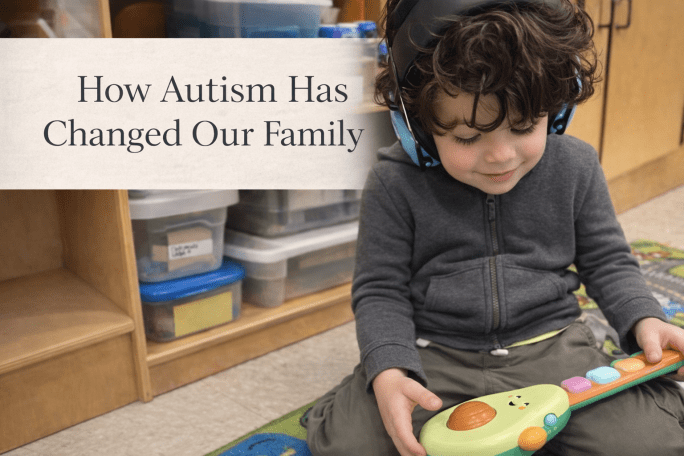
I want to talk about how autism has changed our family.

When August was first diagnosed, everything felt heavy.

There were so many unknowns.

So many questions.

So many words in the evaluation report that felt overwhelming and honestly a little terrifying.

For a while, it felt like the future we thought we were stepping into had suddenly changed.

There was grief in that.

Not grief over August himself — but grief over expectations we didn’t even realize we were holding.

The picture we thought we understood.

But over time, something unexpected started to happen.

Our perspective began to change.

Autism has slowed us down in ways we never anticipated.

It has taught us to celebrate moments that many families might overlook.

A new sound.

A moment of eye contact.

A shared laugh.

A new skill that once felt impossible.

The world teaches us to measure progress in big milestones.

Autism has taught us that sometimes the smallest steps forward are the ones that matter most.

It has also stretched us as parents.

It has taught us patience.

It has taught us to listen more closely.

It has taught us to advocate when something matters.

And it has taught us that every child deserves to be understood for who they are.

Autism hasn’t just shaped August.

It has shaped all of us.

It has made our family more compassionate.

More aware.

More grateful for the little things.

And through all of it, our faith has grown deeper.

We believe that God has a purpose for August’s life.

We believe that his story is still being written.

And while we don’t know exactly what the future holds, we trust the One who does.

Autism may not have been the path we expected.

But it has brought growth, perspective, and moments of joy we may never have noticed otherwise.

And for that, we are grateful.
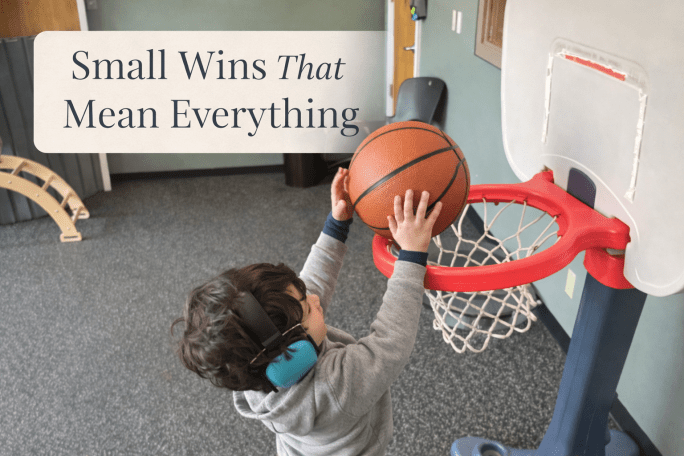
Small Wins That Mean Everything

Since April is Autism Awareness Month, I’ve been sharing a little bit about autism and what it looks like in our family’s life.

Today I want to talk about something that doesn’t get discussed enough when people talk about autism.

Progress.

When most people think about progress in childhood, they picture big milestones.

First words.

First sentences.

First day of school.

Learning to ride a bike.

But when your child has autism, progress often looks a little different.

Sometimes the biggest victories are the ones that other people might not even notice.

For our family, some of the most meaningful progress we’ve seen in August has been in the small things.

Things like improved eye contact.

Things like responding when his name is called.

Things like following simple directions or engaging with the people around him.

August is also learning to communicate using an AAC device, which has opened new doors for him to express his needs and interact with others.

We’ve seen more vocalizations and sounds, which is incredibly exciting as his communication continues to grow.

His play skills have also expanded, including the beginning stages of pretend play — something that once felt far away for him.

And we’ve seen growth in his ability to regulate his emotions and his body, which has made such a difference in his daily life.

These might sound like small things.

But when you’ve walked the road of autism parenting, you quickly realize something important:

Small progress is still real progress.

And those small wins often represent hours of therapy, patience, learning, and perseverance.

Autism has taught our family to celebrate the victories that might otherwise be overlooked.

A moment of connection.

A new sound.

A shared laugh.

A successful interaction.

Things that once felt impossible slowly start to happen.

And when they do, they mean everything.

Progress in autism doesn’t always happen in big leaps.

More often, it happens in tiny steps forward.

But those steps add up.

And watching August grow in his own way, at his own pace, is one of the greatest joys of our journey.

What Advocacy Looks Like

Since April is Autism Awareness Month, I wanted to spend some time talking about some of the things people often see in autism but may not fully understand.

One of those things is advocacy.

When people hear the word advocacy, they sometimes imagine something loud or confrontational. Like standing up and arguing or demanding something.

But most of the time, advocacy is actually much quieter than that.

Advocacy often looks like everyday conversations.

It looks like asking questions.

Explaining needs.

Helping people understand your child a little better.

For our family, advocacy has slowly become a regular part of parenting August.

Sometimes advocacy looks like explaining to a teacher that August may need a little extra time to process instructions.

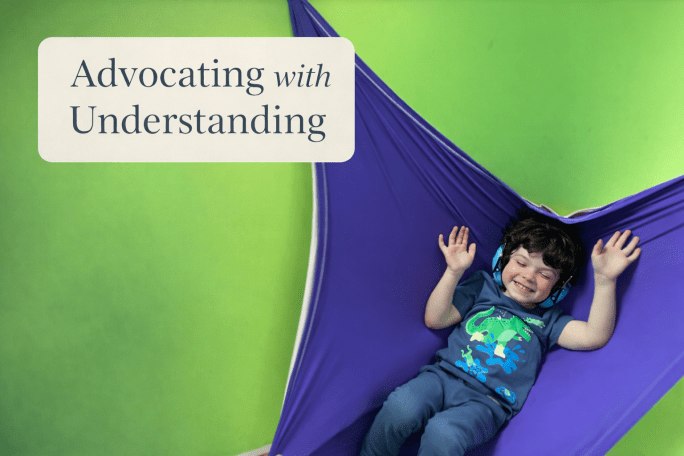
Sometimes it means helping people understand why he wears headphones in loud environments.

Sometimes it means explaining that behaviors people may see — like stimming, needing space during a meltdown, or using an AAC device — aren’t bad behavior.

They’re communication.

When August was first diagnosed, I would tell people about his autism and many of them would respond with something like, “I’m so sorry.”

At first, that response honestly bothered me.

I didn’t feel like August was something to be sorry about.

But over time, I realized something important.

Most of the time, that response wasn’t coming from a lack of empathy.

It was coming from a lack of understanding.

Many people simply don’t know what autism is, or what it actually looks like in everyday life.

And that’s where advocacy comes in.

Sometimes advocacy simply means giving people the opportunity to learn.

One thing autism has taught us is that most people truly want to be supportive — they just don’t always know how.

Advocacy helps bridge that gap.

It turns confusion into understanding.

It turns awkward moments into opportunities for compassion.

And the truth is, advocacy doesn’t just help August.

It helps create spaces where all kinds of kids can thrive.

Kids who learn differently.

Kids who communicate differently.

Kids who experience the world a little differently.

Advocacy reminds us that inclusion isn’t just about making space — it’s about making space thoughtfully.

As parents, we didn’t always know what advocacy would look like.

But over time we’ve learned that sometimes it’s as simple as speaking up with kindness and confidence.

Because when we advocate for our children, we’re not just asking the world to understand them.

We’re helping build a world where they already belong.

This Haircut Was a BIG Deal

This week, we had a win.

And I mean a big win.

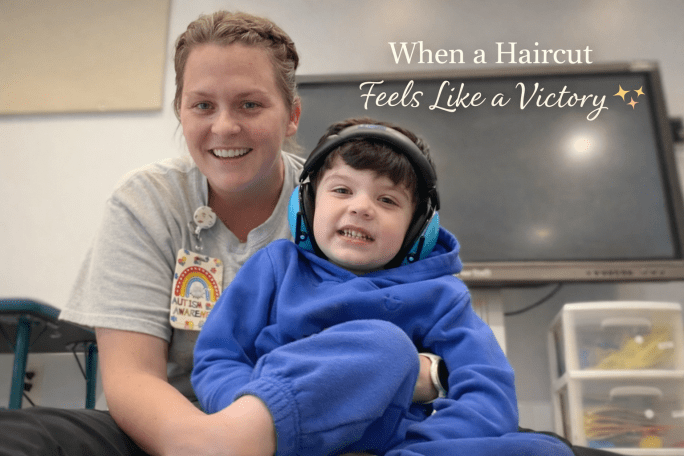
August let me cut his hair.

And if you know August, you already know this is kind of a big deal… because the boy has a ton of thick, wild hair. 😂 It’s basically his signature.

But haircuts in our house have never been simple.

In fact, we used to dread them.

We knew going into it that it would take what felt like an entire NFL defensive line just to hold him still long enough to get through it.

And even then, it was awful.

Snot.

Tears.

Hair everywhere.

And the hardest part wasn’t even the haircut itself.

It was what came after.

Haircuts would trigger huge meltdowns that could last for hours.

We learned very quickly to clear the calendar on haircut day, because we knew the rest of the day would be spent helping August regulate and recover.

This isn’t something most parents of neurotypical kids even have to think about.

But for sensory-sensitive children, something as simple as a haircut can be painfully overstimulating.

The sound of clippers.

Hair falling on the skin.

Someone touching your head and ears.

For August, all of that can feel like too much.

But this week, something different happened.

He sat in the chair while I cut his hair for about 15 minutes.

No tears.

No big meltdown.

Just a little fuss when I got close to his ears — which, honestly, is completely understandable. Even many adults don’t love that part.

And for us, that felt like a huge victory.

The Wins That People Don’t Always See

One thing parenting a child with autism has taught me is that progress often looks different than people expect.

Sometimes progress isn’t measured in big milestones.

Sometimes it looks like:

A haircut without tears.

Brushing teeth for a few extra seconds.

Trying something new without panic.

These are the moments that quietly tell you something is changing.

Growth is happening.

Confidence is building.

And even though they may seem small from the outside, they mean everything to us.

Learning to Celebrate the Small Things

When August was first diagnosed, I didn’t fully understand how important these little victories would become.

Now I do.

Because every time he tolerates something that once felt impossible, it’s a reminder of how far he has come.

It’s a reminder that progress isn’t always loud or dramatic.

Sometimes it’s quiet.

Sometimes it’s a 15-minute haircut.

And sometimes that’s more than enough to celebrate.

Progress Over Perfection

Parenting August has changed the way I look at growth.

I’ve learned to celebrate effort.

To notice the small steps forward.

To appreciate the moments when something that used to feel overwhelming suddenly becomes manageable.

And this week, a haircut felt like a really big step.

So yes — we’re celebrating it.

Because progress deserves to be noticed.

Even the quiet kind.