What Advocacy Looks Like

Since April is Autism Awareness Month, I wanted to spend some time talking about some of the things people often see in autism but may not fully understand.

One of those things is advocacy.

When people hear the word advocacy, they sometimes imagine something loud or confrontational. Like standing up and arguing or demanding something.

But most of the time, advocacy is actually much quieter than that.

Advocacy often looks like everyday conversations.

It looks like asking questions.

Explaining needs.

Helping people understand your child a little better.

For our family, advocacy has slowly become a regular part of parenting August.

Sometimes advocacy looks like explaining to a teacher that August may need a little extra time to process instructions.

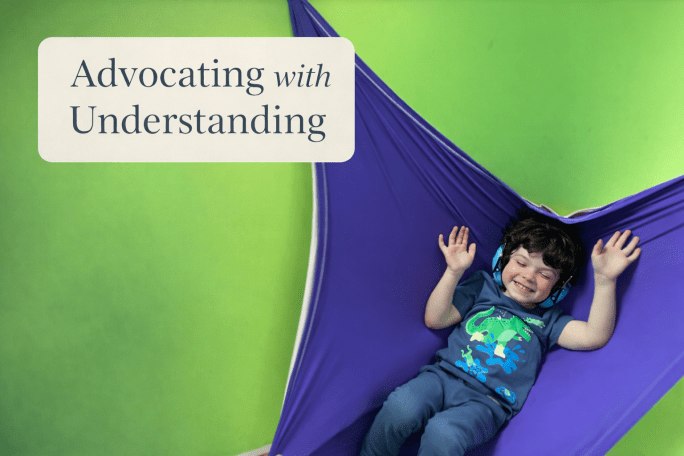
Sometimes it means helping people understand why he wears headphones in loud environments.

Sometimes it means explaining that behaviors people may see — like stimming, needing space during a meltdown, or using an AAC device — aren’t bad behavior.

They’re communication.

When August was first diagnosed, I would tell people about his autism and many of them would respond with something like, “I’m so sorry.”

At first, that response honestly bothered me.

I didn’t feel like August was something to be sorry about.

But over time, I realized something important.

Most of the time, that response wasn’t coming from a lack of empathy.

It was coming from a lack of understanding.

Many people simply don’t know what autism is, or what it actually looks like in everyday life.

And that’s where advocacy comes in.

Sometimes advocacy simply means giving people the opportunity to learn.

One thing autism has taught us is that most people truly want to be supportive — they just don’t always know how.

Advocacy helps bridge that gap.

It turns confusion into understanding.

It turns awkward moments into opportunities for compassion.

And the truth is, advocacy doesn’t just help August.

It helps create spaces where all kinds of kids can thrive.

Kids who learn differently.

Kids who communicate differently.

Kids who experience the world a little differently.

Advocacy reminds us that inclusion isn’t just about making space — it’s about making space thoughtfully.

As parents, we didn’t always know what advocacy would look like.

But over time we’ve learned that sometimes it’s as simple as speaking up with kindness and confidence.

Because when we advocate for our children, we’re not just asking the world to understand them.

We’re helping build a world where they already belong.
Room at the Table (even for bears)

I’ve been thinking a lot about inclusion lately.

Not just for children with autism.

Not just for children with visible differences.

But for all children with different needs, abilities, temperaments, and learning styles.

Inclusion isn’t a trend.

It isn’t a “nice add-on.”

And it isn’t something we do out of charity.

It’s something we do because every child belongs.

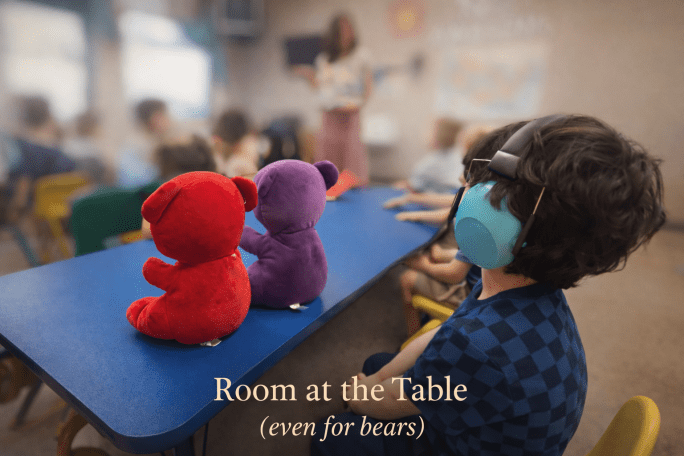
Today, August was allowed to bring his bears to Sunday school so they could “learn about Jesus” too.

To most people, that might seem small.

To us, it wasn’t.

It meant he felt safe.

It meant he felt understood.

It meant someone saw his need for comfort — and made room for it.

That’s inclusion.

As a mom of a child with autism, I’ve seen both sides of this.

I’ve seen spaces where August is fully welcomed — where accommodations are made quietly and naturally, where headphones don’t draw stares, where patience is extended without making him feel “other.”

And I’ve seen spaces where inclusion feels conditional.

Where a child is welcome — as long as they don’t disrupt.

As long as they don’t need too much.

As long as they fit.

But here’s the truth:

Inclusion isn’t about convenience.

It’s about dignity.

And this doesn’t just apply to autism.

It applies to:

• Kids with anxiety

• Kids with ADHD

• Kids with physical disabilities

• Kids who learn differently

• Kids who are shy

• Kids who are loud

• Kids who struggle socially

• Kids who struggle academically

Every child carries something.

Inclusion means we don’t rank whose needs are “big enough” to matter.

It means we teach our children to notice difference without fearing it.

To make space instead of shrinking it.

To ask questions kindly.

To extend friendship intentionally.

And sometimes inclusion looks simple.

It looks like:

• A teacher adjusting seating.

• A church welcoming comfort items without hesitation.

• A parent explaining differences to their child instead of shushing curiosity.

• A friend inviting the child who struggles socially to sit with them.

Inclusion doesn’t require perfection.

It requires awareness.

It requires adults willing to model empathy.

It requires communities willing to flex.

It requires patience.

As parents, we can’t control every environment our children enter.

But we can raise children who make space for others.

That matters.

Because one day, our kids won’t just be the ones needing inclusion.

They’ll be the ones offering it.

And that’s the kind of world I want August — and Sawyer — to grow up in.