Since April is Autism Awareness Month, I wanted to spend some time talking about some of the things people often see in autism but may not fully understand.
One of those things is advocacy.
When people hear the word advocacy, they sometimes imagine something loud or confrontational. Like standing up and arguing or demanding something.
But most of the time, advocacy is actually much quieter than that.
Advocacy often looks like everyday conversations.
It looks like asking questions.
Explaining needs.
Helping people understand your child a little better.
For our family, advocacy has slowly become a regular part of parenting August.
Sometimes advocacy looks like explaining to a teacher that August may need a little extra time to process instructions.
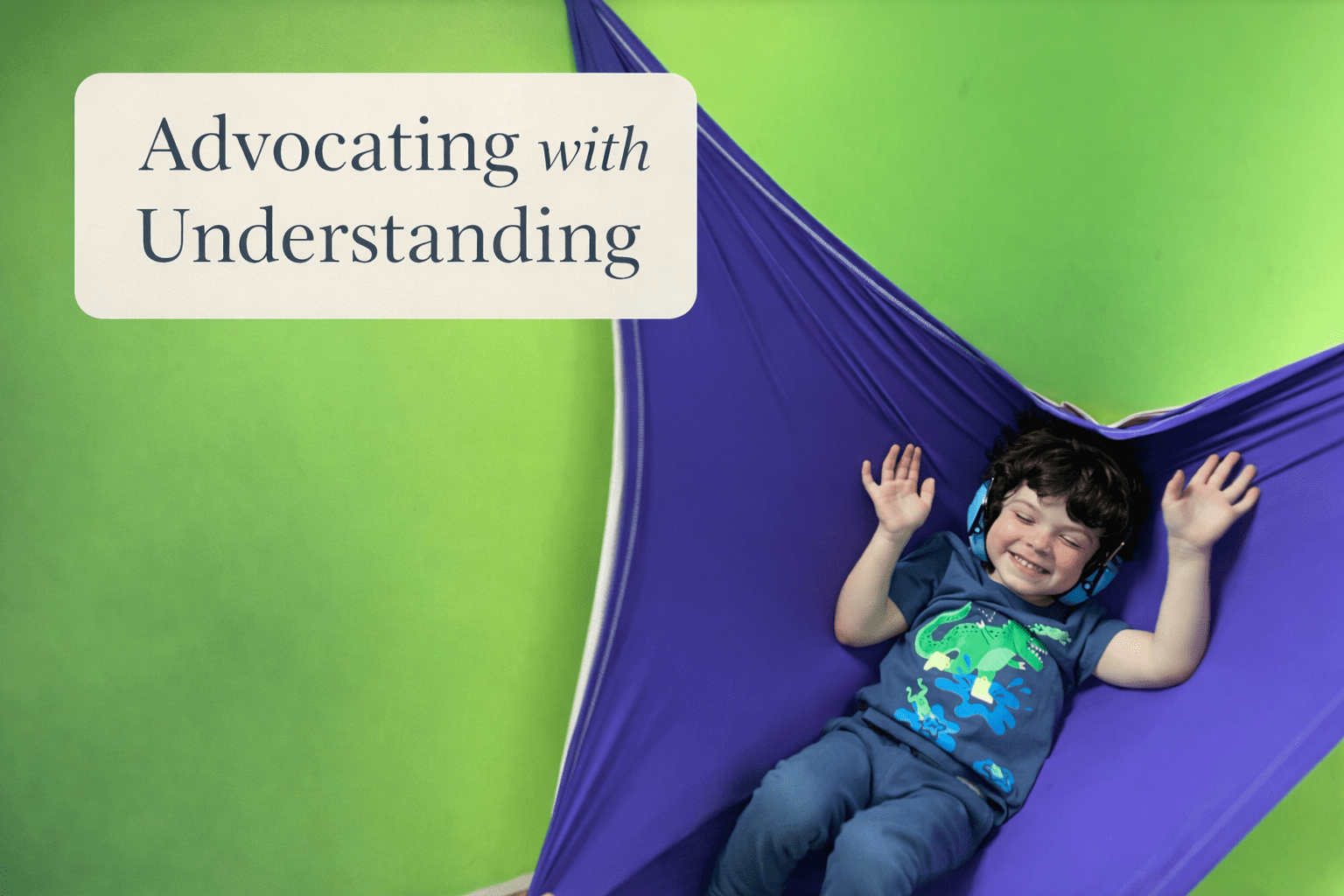
Sometimes it means helping people understand why he wears headphones in loud environments.
Sometimes it means explaining that behaviors people may see — like stimming, needing space during a meltdown, or using an AAC device — aren’t bad behavior.
They’re communication.
When August was first diagnosed, I would tell people about his autism and many of them would respond with something like, “I’m so sorry.”
At first, that response honestly bothered me.
I didn’t feel like August was something to be sorry about.
But over time, I realized something important.
Most of the time, that response wasn’t coming from a lack of empathy.
It was coming from a lack of understanding.
Many people simply don’t know what autism is, or what it actually looks like in everyday life.
And that’s where advocacy comes in.
Sometimes advocacy simply means giving people the opportunity to learn.
One thing autism has taught us is that most people truly want to be supportive — they just don’t always know how.
Advocacy helps bridge that gap.
It turns confusion into understanding.
It turns awkward moments into opportunities for compassion.
And the truth is, advocacy doesn’t just help August.
It helps create spaces where all kinds of kids can thrive.
Kids who learn differently.
Kids who communicate differently.
Kids who experience the world a little differently.
Advocacy reminds us that inclusion isn’t just about making space — it’s about making space thoughtfully.
As parents, we didn’t always know what advocacy would look like.
But over time we’ve learned that sometimes it’s as simple as speaking up with kindness and confidence.
Because when we advocate for our children, we’re not just asking the world to understand them.
We’re helping build a world where they already belong.

