Making Space for Stimming

Since April is Autism Awareness Month, I wanted to spend some time talking about some of the things people often see in autism but may not fully understand.

One of those things is stimming.

Stimming is short for self-stimulatory behavior, and it refers to repetitive movements or sounds that help someone regulate their body or emotions.

For autistic individuals, stimming is often a natural and important way to process the world around them.

It can happen when someone is excited, overwhelmed, happy, anxious, or simply trying to focus.

And while the word might sound clinical, stimming itself is actually very human.

Many people stim in some way without even realizing it.

Think about things like:

• tapping your foot

• twirling your hair

• clicking a pen

• bouncing your leg while sitting

These are all small ways people help their bodies stay regulated.

For autistic individuals, those behaviors may simply look a little different.

Stimming can look like:

• hand movements

• rocking or swaying

• bouncing

• repeating sounds

• snapping or clapping

• pacing

• flapping arms

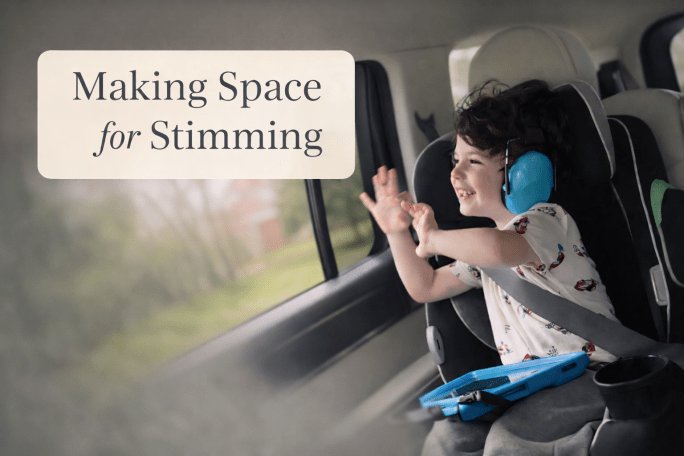
For August, stimming often looks like bouncing, swaying side to side, clapping, snapping his fingers, or flapping his arms when he’s excited.

Sometimes he makes little sounds while he moves, especially when he’s listening to music or feeling really happy.

Sometimes his stimming helps him regulate when he’s overwhelmed.

And sometimes it’s simply his way of experiencing joy.

Earlier in our journey, we didn’t fully understand stimming. Like many parents, our first instinct was to try to stop it.

But as we learned more about autism, our perspective shifted.

Now, instead of trying to stop stimming, we try to make space for it.

Because we’ve realized that for August, these movements help his body regulate and process the world around him.

And sometimes, they’re simply an expression of happiness.

Sometimes when people see stimming in public, they assume something is wrong.

But often, it’s simply a child expressing excitement or helping their body feel regulated.

Stimming is not something that automatically needs to be “fixed.”

In many cases, it’s an important tool that helps autistic individuals regulate their nervous system and feel more comfortable in their environment.

That doesn’t mean every stim is safe in every situation, but understanding why it happens is an important step toward compassion.

One of the things autism has taught our family is that behaviors often have meaning behind them.

When we take the time to understand those behaviors instead of immediately trying to stop them, we learn a lot more about what our children need.

Sometimes the best thing we can do is simply make space for someone to regulate in the way that works for them.

Stimming may look unfamiliar to some people, but it is often just a person’s way of helping their body feel calm, safe, and balanced.

And once you understand that, it starts to feel a lot less mysterious.
What ABA Therapy Actually Looks Like

Since April is Autism Awareness Month, I wanted to spend some time talking about some of the big topics that come up when people talk about autism.

One of the first things many families hear about after an autism diagnosis is ABA therapy.

ABA stands for Applied Behavior Analysis, and if you’ve spent any time in autism parenting spaces, you’ve probably heard a lot of different opinions about it.

For some people, it can sound intimidating or overly clinical. For others, it’s something they’ve never heard of at all.

So I thought it might be helpful to share what ABA therapy actually looks like in our family’s life.

August attends ABA therapy at Mitchell’s Place in their comprehensive program. He goes Monday through Friday from 8:00 in the morning until 3:30 in the afternoon.

During that time, he works closely with two Registered Behavior Technicians (RBTs) who support him throughout the day. Those therapists are supervised by a Board Certified Behavior Analyst (BCBA) who oversees his program and helps guide his goals and progress.

If that sounds very structured, it is.

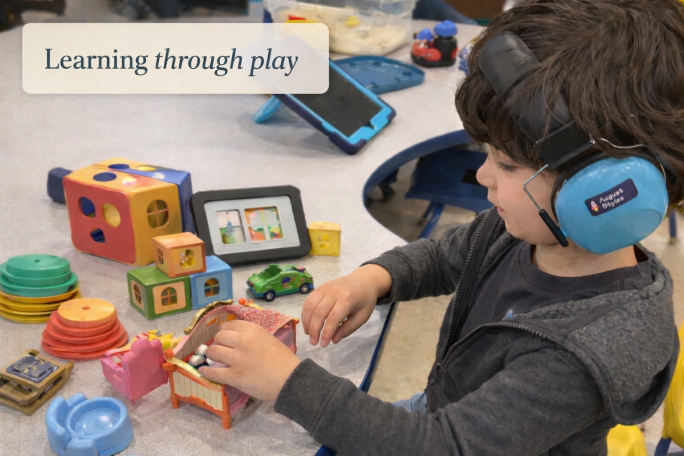
But what most people don’t realize is that ABA therapy doesn’t just happen at a desk or in a clinical setting. A lot of learning happens through play, movement, and everyday activities.

It might look like:

• practicing communication

• learning how to follow directions

• taking turns during play

• building tolerance for new situations

• developing self-help skills

• learning how to regulate big emotions

In other words, many of the things that come naturally to some kids are things August is intentionally being taught and supported through.

And that support has made a real difference.

Since starting ABA, we’ve seen so much growth in August.

His eye contact has improved, and he’s more engaged with the people around him.

He’s become better at following simple commands and responding when his name is called.

He’s learning how to communicate using an AAC device, which has opened new doors for him to express his needs and connect with others.

We’ve also seen more vocalizations and sounds, which is exciting as his communication continues to develop.

His play skills have grown, including beginning to explore pretend play, which is something that once felt far away.

His social skills are improving, and he’s becoming more comfortable interacting with others.

And one of the biggest changes we’ve noticed is his ability to regulate himself. Moments that once felt overwhelming are becoming more manageable as he learns new ways to cope and respond.

Progress doesn’t happen overnight, and therapy isn’t a magic fix.

But it has been an important piece of support for our family.

It’s also important to acknowledge that ABA can be a debated topic within the autism community, and every autistic person and every family has their own experiences and perspectives.

For our family, ABA has been a tool that helps August learn, grow, and build skills that support his development.

And at the end of the day, that’s what matters most to us.

One of the things autism parenting has taught me is that there isn’t one single path that works for every child.

Every child is different.

Every family is learning as they go.

And for August, ABA therapy has been one of the places where we’ve watched him grow in ways that make us incredibly proud.

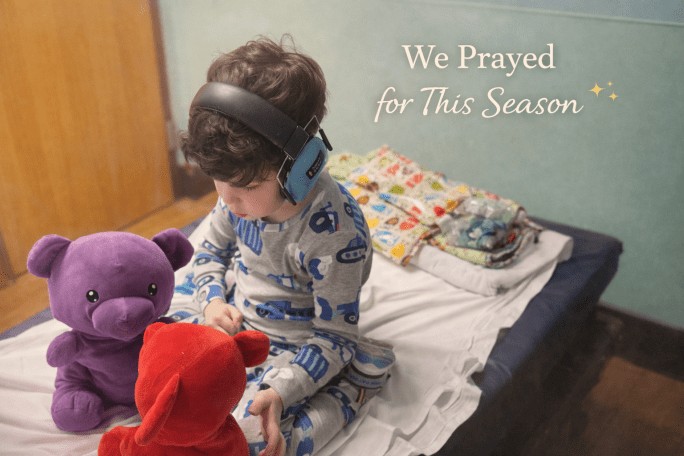
We Prayed for This Season

I’ve found myself pausing more.

Something is happening right in front of our eyes.

The things we have been praying for.

The things we have been crying out to God for.

The things we have been waiting on for so long.

They’re happening.

And I don’t want to rush past this season without acknowledging it.

From the Hard Season to the Harvest

There was a time when everything felt heavy.

When progress felt slow.

When days felt long.

When it felt like we were pouring out everything we had—emotionally, mentally, spiritually—and wondering when we would see breakthrough.

But in that season, something else was happening too.

We were growing closer to God.

In the uncertainty.

In the exhaustion.

In the moments where we didn’t have answers.

We learned how to lean on Him in a way we never had before.

And now?

It feels like we are stepping into a season where we are reaping the harvest of everything we walked through.

A Year of Waiting, and So Much Grace

Recently, August had to undergo a dental procedure at Children’s Hospital.

He was placed under general anesthesia, and if I’m being honest, I had been carrying the weight of that for a long time.

We waited an entire year on a waitlist just to get an OR date.

A whole year of praying.

Preparing.

Wondering how he would handle it.

And when the day finally came…

He did so, so well.

The procedure was completed successfully, and his recovery has been nothing short of amazing.

No meltdowns.

No major dysregulation.

Just peace.

It felt like God met us there in such a tangible way.

Prayers Being Answered in Real Time

We’ve been witnessing something that’s hard to fully explain unless you’ve lived it.

We are seeing prayers answered in real time.

August has started using new phrases like:

“I did it.”

And it’s not just that he’s talking.

It’s that he’s using his words with intention—at the right time, in the right way.

We’ve prayed for this.

We’ve hoped for this.

And now we’re watching it happen.

New Growth We’ve Never Seen Before

Another milestone that has felt incredibly special…

August has started forming attachments to toys—and even more than that, he’s engaging in pretend play.

This is something we had never really seen before.

And now?

We’re watching him imagine, engage, and interact in ways that are completely new.

It’s one of those moments where you just stop and think,

This is what we’ve been praying for.

The Kind of Wins That Change Everything

And then today…

August let us brush his teeth with zero tears.

No meltdown.

No struggle.

No stress.

And even more than that—he transitioned right back to playing afterward like it was nothing.

If you know, you know.

This isn’t small.

This is something that used to feel impossible.

It Was Worth It

And I don’t say that lightly.

The hard days.

The meltdowns.

The waiting.

The prayers that felt unanswered for so long.

All of it.

It was worth it to stand here now and watch this kind of growth unfold.

Not because everything is perfect.

But because we can see God’s hand in it.

So clearly.

God Was Working the Whole Time

This season has reminded me of something I don’t want to forget:

God wasn’t absent in the hard season.

He was preparing us.

Strengthening us.

Growing us.

Drawing us closer to Him.

And now, we’re seeing the fruit of that.

Not all at once.

Not in a flashy way.

But in steady, meaningful, undeniable growth.

Holding Gratitude and Awe

We’re still learning.

Still growing.

Still walking this journey day by day.

But right now, I just feel a deep sense of gratitude.

And honestly… awe.

Because watching your prayers unfold in front of you?

That changes you. That changes everything.

If You’re Still Waiting

If you’re in a season where you’re still praying…m

Still waiting…

Still hoping for breakthrough…

I just want to gently remind you:

God is still working.

Even when you don’t see it yet.

Even when it feels slow.

Even when it feels hard.

Because I was there too.

And now I’m watching things unfold that I once only prayed for.

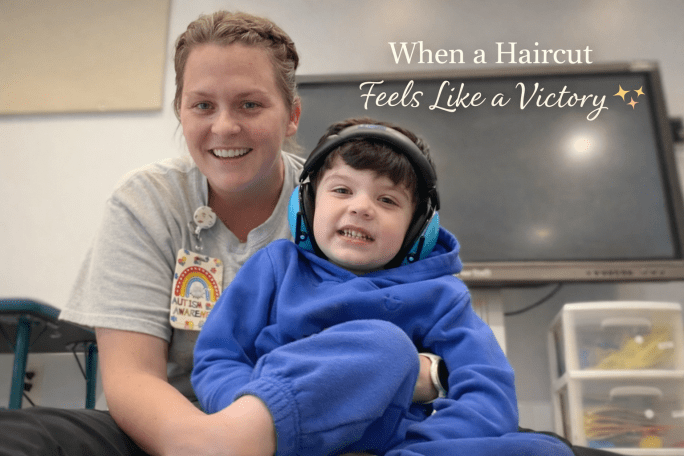
This Haircut Was a BIG Deal

This week, we had a win.

And I mean a big win.

August let me cut his hair.

And if you know August, you already know this is kind of a big deal… because the boy has a ton of thick, wild hair. 😂 It’s basically his signature.

But haircuts in our house have never been simple.

In fact, we used to dread them.

We knew going into it that it would take what felt like an entire NFL defensive line just to hold him still long enough to get through it.

And even then, it was awful.

Snot.

Tears.

Hair everywhere.

And the hardest part wasn’t even the haircut itself.

It was what came after.

Haircuts would trigger huge meltdowns that could last for hours.

We learned very quickly to clear the calendar on haircut day, because we knew the rest of the day would be spent helping August regulate and recover.

This isn’t something most parents of neurotypical kids even have to think about.

But for sensory-sensitive children, something as simple as a haircut can be painfully overstimulating.

The sound of clippers.

Hair falling on the skin.

Someone touching your head and ears.

For August, all of that can feel like too much.

But this week, something different happened.

He sat in the chair while I cut his hair for about 15 minutes.

No tears.

No big meltdown.

Just a little fuss when I got close to his ears — which, honestly, is completely understandable. Even many adults don’t love that part.

And for us, that felt like a huge victory.

The Wins That People Don’t Always See

One thing parenting a child with autism has taught me is that progress often looks different than people expect.

Sometimes progress isn’t measured in big milestones.

Sometimes it looks like:

A haircut without tears.

Brushing teeth for a few extra seconds.

Trying something new without panic.

These are the moments that quietly tell you something is changing.

Growth is happening.

Confidence is building.

And even though they may seem small from the outside, they mean everything to us.

Learning to Celebrate the Small Things

When August was first diagnosed, I didn’t fully understand how important these little victories would become.

Now I do.

Because every time he tolerates something that once felt impossible, it’s a reminder of how far he has come.

It’s a reminder that progress isn’t always loud or dramatic.

Sometimes it’s quiet.

Sometimes it’s a 15-minute haircut.

And sometimes that’s more than enough to celebrate.

Progress Over Perfection

Parenting August has changed the way I look at growth.

I’ve learned to celebrate effort.

To notice the small steps forward.

To appreciate the moments when something that used to feel overwhelming suddenly becomes manageable.

And this week, a haircut felt like a really big step.

So yes — we’re celebrating it.

Because progress deserves to be noticed.

Even the quiet kind.

You Are Still a Person, Too

(Why mothers can’t disappear in motherhood)

Somewhere along the way, many mothers quietly disappear.

Not physically — we’re still packing lunches, scheduling appointments, wiping tears, cheering from the sidelines, and showing up for everyone who needs us.

But pieces of us slowly get pushed to the side.

Our hobbies.

Our interests.

Our time.

Sometimes even our identity.

Motherhood is one of the most beautiful callings in the world — but it was never meant to erase the woman God created you to be.

And no matter what season of motherhood you’re in, you are still allowed to exist as a whole person too.

This Post Is for Every Kind of Mom

This post is for the new mom who is still trying to figure everything out.

The one who barely remembers what a full night of sleep feels like and is wondering if she’ll ever feel like herself again.

It’s for the mom learning to juggle siblings, realizing that parenting one child is one thing… but parenting multiple tiny humans with completely different personalities is an entirely new level of chaos.

It’s for the mom of teenagers, who spent years pouring herself into motherhood and suddenly feels a little invisible while her child enters a season that requires less nurturing and… somehow a lot more money. 😂

And it’s also for the mom of adult children, who is learning how to find her place in their lives in a new way. The one trying to balance being supportive without overstepping, learning when to step back, and discovering what it looks like to be both a trusted guide and, eventually, a friend.

Motherhood changes with every season.

But in every season, one truth remains the same:

You still matter, too.

The Myth of the Self-Sacrificing Mom

There’s this unspoken belief that “good moms” give up everything for their children.

Their hobbies.

Their friendships.

Their interests.

Their time alone.

And while motherhood absolutely requires sacrifice, it was never meant to require erasure.

Because the truth is, our children don’t just need caregivers.

They need whole mothers.

Mothers who laugh.

Mothers who rest.

Mothers who still have passions.

Mothers who show them what it looks like to live a full life.

What Special Needs Parenting Can Teach Us

Raising August has taught me a lot about priorities.

There are seasons where our life revolves around therapy schedules, advocacy, and learning new skills. There are days that feel heavy and exhausting.

But there are also moments that remind me that life is still meant to be enjoyed.

Coffee on the porch.

Laughing with my husband.

Watching August jump and crash onto the crash pad like it’s the best game in the world.

And in those moments, I remember that caring for myself isn’t selfish.

It’s necessary.

Because when I take care of my own heart, I show up for my family with more patience, more grace, and more joy.

The Example We Set for Our Children

Our children are always watching.

They’re learning from us what adulthood looks like.

If they only see us exhausted, overwhelmed, and running on empty, what does that teach them about life?

But if they see a mother who takes time to breathe…

who laughs…

who nurtures friendships…

who spends time with God…

who still has pieces of her own life…

They learn something powerful.

They learn that caring for others and caring for yourself can exist at the same time.

Making Room for Yourself

For some moms, making yourself a priority might look big.

For others, it might be small.

Maybe it’s a workout.

Maybe it’s reading a book.

Maybe it’s sitting quietly with coffee before the house wakes up.

Maybe it’s a walk.

Maybe it’s five minutes of prayer and quiet.

It doesn’t have to be glamorous.

It just has to exist.

Because motherhood was never meant to erase the woman God created you to be.

The Truth I’m Learning

I am August’s and Sawyer’s mother.

But that is not the only thing I am.

I’m a wife.

A believer.

A friend.

A woman with dreams, interests, and a life that still matters too.

And the more I learn to care for the person God created me to be, the better mother I become.

Not because I’m doing more.

But because I’m finally learning that loving my children and valuing myself were never meant to compete.

They were always meant to coexist.

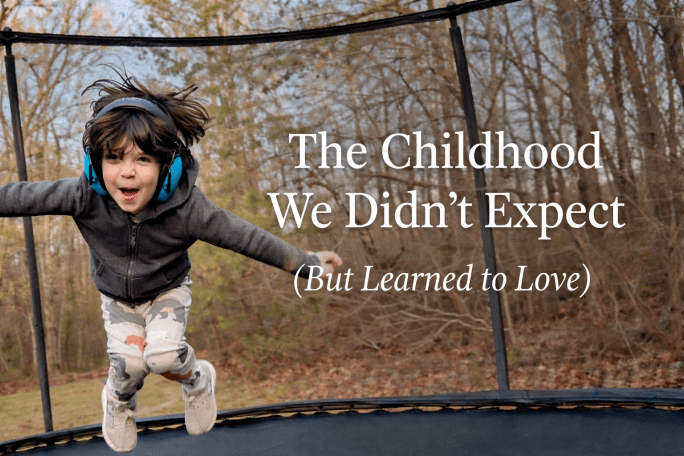
The Childhood We Didn’t Expect (But Learned to Love)

There are a lot of things people associate with autism.

Therapy appointments.

Evaluations.

Meltdowns.

Sensory needs.

And yes — those things are part of our life.

But so is laughter.

A lot of it.

When August was first diagnosed, I quietly grieved the picture of childhood I had always imagined. The one where everything looked typical and predictable.

But over time, something changed.

Instead of focusing on what we thought childhood would look like, we started paying attention to what actually makes August happy.

And it turns out, the little things are where the joy lives.

August loves music. When one of his favorite songs comes on, he lights up. He’ll bounce back and forth and sway side to side like the music is moving through him.

Sometimes he claps along to the rhythm. Other times he snaps his fingers and makes silly sounds while he dances.

It’s impossible not to smile when you see it.

He also loves light-up toys and anything that makes sound. One of his favorite things right now is the Bluey keytar he got for Christmas. If music starts playing in our house, there’s a very good chance August is nearby, happily pressing the keys and dancing along.

Another thing August loves is connection.

He gives the best hugs and is always ready with a high five. And if you try to tickle him, be prepared — he will absolutely dissolve into laughter.

But if you asked August what his favorite activity is, the answer would still be easy.

Jumping.

More specifically, jumping and crashing onto his crash pad.

He will jump, crash, bounce back up, and do it all over again with the biggest grin on his face.

And when summer comes around, the trampoline has some competition.

August loves water play. The sprinkler, the hose, splashing in puddles — if water is involved, he’s all in. Watching him run through the sprinkler and laugh is one of those simple childhood moments that never gets old.

One thing autism has taught us is to never take small milestones for granted.

Things that once felt ordinary suddenly feel worth celebrating. Progress is noticed more carefully. Little victories matter more.

And because of that, the joyful moments feel even bigger.

Not every part of an autism diagnosis is easy or fun. There are hard days. There are challenges we didn’t expect— and still don’t know how to handle.

But we’ve learned something important along the way:

We still get to have fun.

Sometimes it just looks different than we once imagined.

Sometimes fun looks like dancing in the living room.

Sometimes it looks like silly sounds and belly laughs.

Sometimes it looks like a boy jumping full force onto a crash pad over and over again.

And sometimes it looks like a mom sitting on the couch watching all of it unfold… while silently wondering how one small human has this much energy.

We don’t spend our time mourning what we once thought August’s childhood would look like.

Instead, we’ve learned to celebrate the childhood he’s actually living.

And in many ways, this journey has shaped us as parents in ways we didn’t expect.

It’s taught us to slow down.

To notice the little things.

To celebrate progress, no matter how small.

And that perspective is something we now carry into raising Sawyer too.

Whether his path includes a diagnosis or not, we want to approach his childhood the same way — with gratitude, patience, and a deep appreciation for the moments that make him who he is.

Because at the end of the day, joy doesn’t have to look typical to be real.

And August brings a lot of it into our home.

(Along with an impressive amount of trampoline bouncing and full speed crashing.)

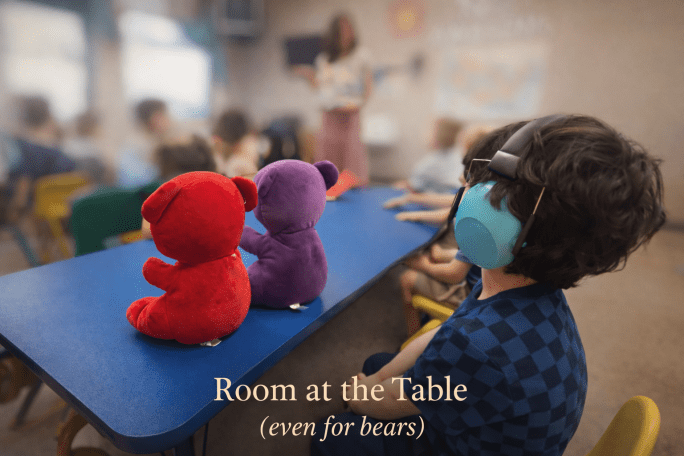
Room at the Table (even for bears)

I’ve been thinking a lot about inclusion lately.

Not just for children with autism.

Not just for children with visible differences.

But for all children with different needs, abilities, temperaments, and learning styles.

Inclusion isn’t a trend.

It isn’t a “nice add-on.”

And it isn’t something we do out of charity.

It’s something we do because every child belongs.

Today, August was allowed to bring his bears to Sunday school so they could “learn about Jesus” too.

To most people, that might seem small.

To us, it wasn’t.

It meant he felt safe.

It meant he felt understood.

It meant someone saw his need for comfort — and made room for it.

That’s inclusion.

As a mom of a child with autism, I’ve seen both sides of this.

I’ve seen spaces where August is fully welcomed — where accommodations are made quietly and naturally, where headphones don’t draw stares, where patience is extended without making him feel “other.”

And I’ve seen spaces where inclusion feels conditional.

Where a child is welcome — as long as they don’t disrupt.

As long as they don’t need too much.

As long as they fit.

But here’s the truth:

Inclusion isn’t about convenience.

It’s about dignity.

And this doesn’t just apply to autism.

It applies to:

• Kids with anxiety

• Kids with ADHD

• Kids with physical disabilities

• Kids who learn differently

• Kids who are shy

• Kids who are loud

• Kids who struggle socially

• Kids who struggle academically

Every child carries something.

Inclusion means we don’t rank whose needs are “big enough” to matter.

It means we teach our children to notice difference without fearing it.

To make space instead of shrinking it.

To ask questions kindly.

To extend friendship intentionally.

And sometimes inclusion looks simple.

It looks like:

• A teacher adjusting seating.

• A church welcoming comfort items without hesitation.

• A parent explaining differences to their child instead of shushing curiosity.

• A friend inviting the child who struggles socially to sit with them.

Inclusion doesn’t require perfection.

It requires awareness.

It requires adults willing to model empathy.

It requires communities willing to flex.

It requires patience.

As parents, we can’t control every environment our children enter.

But we can raise children who make space for others.

That matters.

Because one day, our kids won’t just be the ones needing inclusion.

They’ll be the ones offering it.

And that’s the kind of world I want August — and Sawyer — to grow up in.

Navigating Meltdowns

Let’s just say it plainly.

Meltdowns are freakin’ hard.

Not the “wrong color cup” kind. I mean the full-body, nervous-system-overloaded kind.

For a long time, I thought meltdowns meant I was doing something wrong. That if I had prepared better or transitioned smoother or explained more clearly, we could avoid them.

Sometimes prevention helps.

Sometimes it absolutely does not.

And that was a hard lesson for me.

First: You Cannot Reason During a Meltdown

You cannot logic someone out of a nervous system that’s completely overwhelmed.

Trying to reason in the middle of it only makes things worse. It’s not the time for life lessons. It’s not the time for “use your words.” It’s definitely not the time for consequences.

When August is melting down, we don’t lecture.

We make sure he’s safe.

And then we give him space.

August needs space and a soft place to land — literally. We actually have a crash pad in our living room. Just fully committed at this point. If he needs to drop to his knees or crash forward, there’s somewhere safe for him to do it.

When he’s overwhelmed, his body needs release. So we clear the area, stay close enough to observe, and let him work it out.

Close enough to protect.

Far enough not to add more input.

Because nothing says “we’ve adjusted to autism parenting” quite like home decor that doubles as impact protection.

When It Was Really Hard

There was a season when his meltdowns were intense.

He would scratch his arms until they bled.

He would claw at his face.

He would pull at his hair.

It was heartbreaking to watch.

In those moments, space alone wasn’t enough. We had to step in physically to keep him safe. Sometimes that meant giving him a firm “bear hug” — not as punishment, but as protection. Just enough pressure to keep his body from hurting itself.

No one really prepares you for becoming a human weighted blanket, but here we are.

Those were exhausting days.

What Helps August

Over time, we learned that August benefits from proprioceptive input — basically, deep pressure that helps his body regulate.

So we adjusted.

We give him firm squeezes to his large muscle groups.

We press his hands between ours.

We use headphones when he needs pressure around his head.

At school, he sometimes benefits from a compression vest.

These aren’t magic fixes.

But they help.

And sometimes helping a little is enough to shorten the storm.

What I’ve Learned

Meltdowns are NOT manipulation.

They are overwhelm.

They are a tiny nervous system saying, “I cannot handle this right now.”

Our job isn’t to control it.

It’s to create safety within it.

Some days that looks calm and confident.

Some days that looks like me whispering, “Lord, please,” under my breath while barely holding it together in public.

But we’re learning.

We’re adjusting.

We’re finding what works for August.

If you’re walking through intense meltdowns right now — sitting on the floor while your child cries, or driving home in silence after a public one —

You’re not failing.

You’re learning your child’s language.

And that takes time.

August, always.