Since April is Autism Awareness Month, I wanted to spend some time talking about some of the things people often see in autism but may not fully understand.
One of those things is stimming.
Stimming is short for self-stimulatory behavior, and it refers to repetitive movements or sounds that help someone regulate their body or emotions.
For autistic individuals, stimming is often a natural and important way to process the world around them.
It can happen when someone is excited, overwhelmed, happy, anxious, or simply trying to focus.
And while the word might sound clinical, stimming itself is actually very human.
Many people stim in some way without even realizing it.
Think about things like:
• tapping your foot
• twirling your hair
• clicking a pen
• bouncing your leg while sitting
These are all small ways people help their bodies stay regulated.
For autistic individuals, those behaviors may simply look a little different.
Stimming can look like:
• hand movements
• rocking or swaying
• bouncing
• repeating sounds
• snapping or clapping
• pacing
• flapping arms
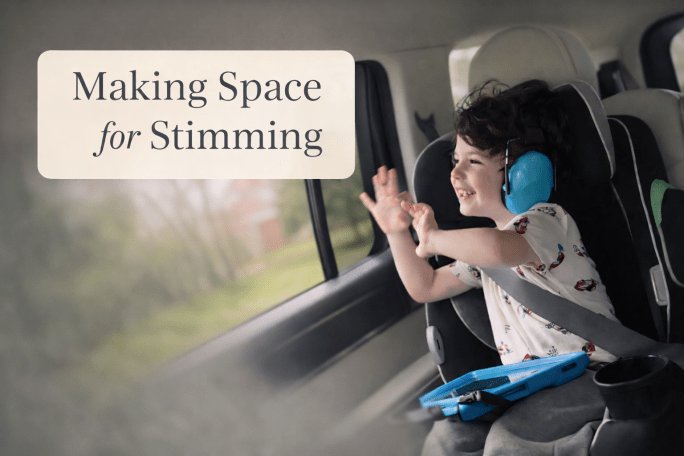
For August, stimming often looks like bouncing, swaying side to side, clapping, snapping his fingers, or flapping his arms when he’s excited.
Sometimes he makes little sounds while he moves, especially when he’s listening to music or feeling really happy.
Sometimes his stimming helps him regulate when he’s overwhelmed.
And sometimes it’s simply his way of experiencing joy.
Earlier in our journey, we didn’t fully understand stimming. Like many parents, our first instinct was to try to stop it.
But as we learned more about autism, our perspective shifted.
Now, instead of trying to stop stimming, we try to make space for it.
Because we’ve realized that for August, these movements help his body regulate and process the world around him.
And sometimes, they’re simply an expression of happiness.
Sometimes when people see stimming in public, they assume something is wrong.
But often, it’s simply a child expressing excitement or helping their body feel regulated.
Stimming is not something that automatically needs to be “fixed.”
In many cases, it’s an important tool that helps autistic individuals regulate their nervous system and feel more comfortable in their environment.
That doesn’t mean every stim is safe in every situation, but understanding why it happens is an important step toward compassion.
One of the things autism has taught our family is that behaviors often have meaning behind them.
When we take the time to understand those behaviors instead of immediately trying to stop them, we learn a lot more about what our children need.
Sometimes the best thing we can do is simply make space for someone to regulate in the way that works for them.
Stimming may look unfamiliar to some people, but it is often just a person’s way of helping their body feel calm, safe, and balanced.
And once you understand that, it starts to feel a lot less mysterious.
 August, Always