Since April is Autism Awareness Month, I wanted to spend some time talking about some of the big topics that come up when people talk about autism.
One of the first things many families hear about after an autism diagnosis is ABA therapy.
ABA stands for Applied Behavior Analysis, and if you’ve spent any time in autism parenting spaces, you’ve probably heard a lot of different opinions about it.
For some people, it can sound intimidating or overly clinical. For others, it’s something they’ve never heard of at all.
So I thought it might be helpful to share what ABA therapy actually looks like in our family’s life.
August attends ABA therapy at Mitchell’s Place in their comprehensive program. He goes Monday through Friday from 8:00 in the morning until 3:30 in the afternoon.
During that time, he works closely with two Registered Behavior Technicians (RBTs) who support him throughout the day. Those therapists are supervised by a Board Certified Behavior Analyst (BCBA) who oversees his program and helps guide his goals and progress.
If that sounds very structured, it is.
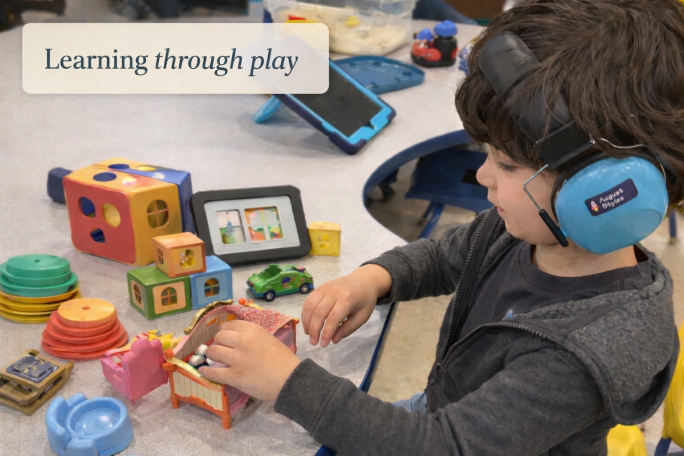
But what most people don’t realize is that ABA therapy doesn’t just happen at a desk or in a clinical setting. A lot of learning happens through play, movement, and everyday activities.
It might look like:
• practicing communication
• learning how to follow directions
• taking turns during play
• building tolerance for new situations
• developing self-help skills
• learning how to regulate big emotions
In other words, many of the things that come naturally to some kids are things August is intentionally being taught and supported through.
And that support has made a real difference.
Since starting ABA, we’ve seen so much growth in August.
His eye contact has improved, and he’s more engaged with the people around him.
He’s become better at following simple commands and responding when his name is called.
He’s learning how to communicate using an AAC device, which has opened new doors for him to express his needs and connect with others.
We’ve also seen more vocalizations and sounds, which is exciting as his communication continues to develop.
His play skills have grown, including beginning to explore pretend play, which is something that once felt far away.
His social skills are improving, and he’s becoming more comfortable interacting with others.
And one of the biggest changes we’ve noticed is his ability to regulate himself. Moments that once felt overwhelming are becoming more manageable as he learns new ways to cope and respond.
Progress doesn’t happen overnight, and therapy isn’t a magic fix.
But it has been an important piece of support for our family.
It’s also important to acknowledge that ABA can be a debated topic within the autism community, and every autistic person and every family has their own experiences and perspectives.
For our family, ABA has been a tool that helps August learn, grow, and build skills that support his development.
And at the end of the day, that’s what matters most to us.
One of the things autism parenting has taught me is that there isn’t one single path that works for every child.
Every child is different.
Every family is learning as they go.
And for August, ABA therapy has been one of the places where we’ve watched him grow in ways that make us incredibly proud.

 August, Always