This Is Our Testimony in Motion

I want to share something clearly — and from a place of deep peace.

As a family, we believe that God has already healed August.

Not “maybe someday.”

Not “if everything lines up perfectly.”

Not “if therapy works hard enough.”

We believe it is done.

And right now, we are walking patiently and faithfully as we wait for that healing to manifest physically.

That doesn’t mean the journey isn’t real.

We still sit in evaluations.

We still attend therapy.

We still navigate meltdowns.

We still have hard days.

We feel them.

But we walk through them anchored in something steady.

August’s diagnosis did not surprise God.

Autism is not stronger than the name of Jesus.

And this story is not over.

There are days when our faith feels bold and immovable.

There are days when it feels quiet and whispered.

Both count.

We are not pretending the road is easy.

We are choosing to trust the One who walks it with us.

We believe August will be fully restored to health.

We believe God is going to use him in a mighty, powerful way.

We believe his life will point people to the Lord.

We know not everyone will understand this kind of faith, and that’s okay — this is simply where the Lord has anchored our hearts.

And while we wait, we praise.

We praise God for:

• The progress we’ve already seen

• The growth that is happening

• The strength in our marriage

• The compassion growing in our family

• The faith that has deepened in the waiting

This blog is not just about autism parenting.

It is a record of what God is doing — in August, and in us.

Every therapy session.

Every breakthrough.

Every hard moment.

Every answered prayer.

This is our testimony unfolding in real time.

We don’t know the timeline.

We don’t know the method.

But we know the Healer.

And until the fullness of that healing is visible, we will keep showing up.

We will keep advocating.

We will keep praying.

We will keep praising.

To God be the glory — in the waiting, and in the restoration.
Navigating Meltdowns

Let’s just say it plainly.

Meltdowns are freakin’ hard.

Not the “wrong color cup” kind. I mean the full-body, nervous-system-overloaded kind.

For a long time, I thought meltdowns meant I was doing something wrong. That if I had prepared better or transitioned smoother or explained more clearly, we could avoid them.

Sometimes prevention helps.

Sometimes it absolutely does not.

And that was a hard lesson for me.

First: You Cannot Reason During a Meltdown

You cannot logic someone out of a nervous system that’s completely overwhelmed.

Trying to reason in the middle of it only makes things worse. It’s not the time for life lessons. It’s not the time for “use your words.” It’s definitely not the time for consequences.

When August is melting down, we don’t lecture.

We make sure he’s safe.

And then we give him space.

August needs space and a soft place to land — literally. We actually have a crash pad in our living room. Just fully committed at this point. If he needs to drop to his knees or crash forward, there’s somewhere safe for him to do it.

When he’s overwhelmed, his body needs release. So we clear the area, stay close enough to observe, and let him work it out.

Close enough to protect.

Far enough not to add more input.

Because nothing says “we’ve adjusted to autism parenting” quite like home decor that doubles as impact protection.

When It Was Really Hard

There was a season when his meltdowns were intense.

He would scratch his arms until they bled.

He would claw at his face.

He would pull at his hair.

It was heartbreaking to watch.

In those moments, space alone wasn’t enough. We had to step in physically to keep him safe. Sometimes that meant giving him a firm “bear hug” — not as punishment, but as protection. Just enough pressure to keep his body from hurting itself.

No one really prepares you for becoming a human weighted blanket, but here we are.

Those were exhausting days.

What Helps August

Over time, we learned that August benefits from proprioceptive input — basically, deep pressure that helps his body regulate.

So we adjusted.

We give him firm squeezes to his large muscle groups.

We press his hands between ours.

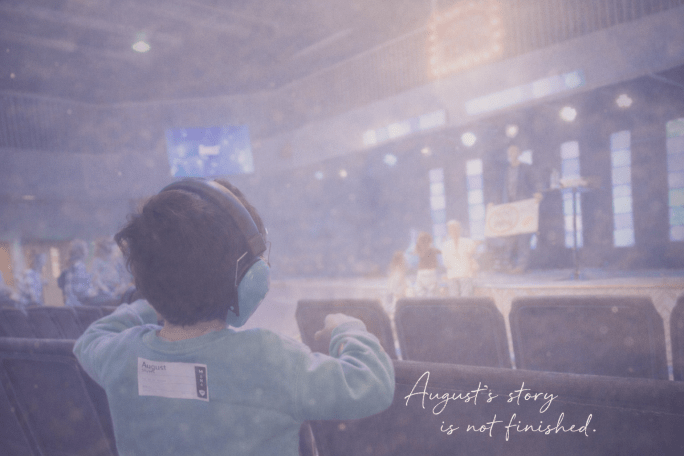
We use headphones when he needs pressure around his head.

At school, he sometimes benefits from a compression vest.

These aren’t magic fixes.

But they help.

And sometimes helping a little is enough to shorten the storm.

What I’ve Learned

Meltdowns are NOT manipulation.

They are overwhelm.

They are a tiny nervous system saying, “I cannot handle this right now.”

Our job isn’t to control it.

It’s to create safety within it.

Some days that looks calm and confident.

Some days that looks like me whispering, “Lord, please,” under my breath while barely holding it together in public.

But we’re learning.

We’re adjusting.

We’re finding what works for August.

If you’re walking through intense meltdowns right now — sitting on the floor while your child cries, or driving home in silence after a public one —

You’re not failing.

You’re learning your child’s language.

And that takes time.

August, always.

The Day We Got The Diagnosis

April 22, 2024.

August was three.

But honestly, that day didn’t start in April. It started when he was about a year old and I began noticing he was behind. He started Early Intervention at 16 months, and from then on therapy appointments just became part of our weekly routine. Like preschool… but with more assessments and fewer goldfish.

We waited almost a year for a full evaluation.

A whole year of wondering.

A whole year of “maybe.”

A whole year of trying not to Google things at 11 p.m. and absolutely Googling them anyway.

By the time we finally had the three long days of testing — several hours at a time — Dakota and I were emotionally exhausted. We were there for every session, nodding like we fully understood everything, while internally spiraling.

We had suspected autism for a while. But suspicion still leaves room for denial. A diagnosis does not.

When the report came, I didn’t want to read it.

Reading it made it official.

Autism Spectrum Disorder.

Level 3.

Very substantial support.

Intellectual impairment.

Severe language delay.

Those words felt…clinical.

I didn’t even really know what “Level 3” meant. I just knew it didn’t sound like “oh, you’ll barely notice.”

Seeing phrases like “severe” and “very substantial support” attached to my three-year-old felt unreal. On paper, it looked terrifying. In real life, he was still the same little boy who lined up his toys and laughed at the exact same part of his favorite show every time like it was brand new.

I’ll be honest — I was having a full menty b.

Not because I didn’t love him.

But because I didn’t know what this meant.

I didn’t know anyone walking this road.

I didn’t know what the future would look like.

Ignorance had been easier. Before the report, I didn’t know how severe it was. Now I did. And that knowledge felt heavy.

The drive home was quiet. There were tears. Dakota was steady beside me — which is impressive considering I was in the passenger seat fighting for emotional stability. He carried us that day.

Reading the full evaluation later was its own experience. Seeing my baby “scored” in black and white hit differently. Clinical language has absolutely no bedside manner.

My faith felt shaken. I had questions I didn’t know how to ask and prayers I didn’t know how to pray.

But here’s what I know now:

It didn’t change his laugh.

The diagnosis didn’t change August.

It didn’t change the way he reaches for me.

It didn’t change the way God sees him.

It gave us language.

It gave us direction.

It gave us a starting point.

April 22 was heavy.

But it wasn’t the end.

It was the beginning of learning how to advocate fiercely, love intentionally, and trust God when the plan looks nothing like the Pinterest board I had in my head.

If you’re in that waiting season — or sitting in a quiet car after an appointment pretending you’re fine while absolutely not fine —

I see you.

April 22 changed our story.

But it didn’t break it.

August, always.

Welcome to August, Always

I’ve thought about starting this blog for a long time and truthfully fear has held me back.

I do not have all the answers.

I definitely do not feel qualified.

But our story matters — and maybe it can help someone else feel less alone.

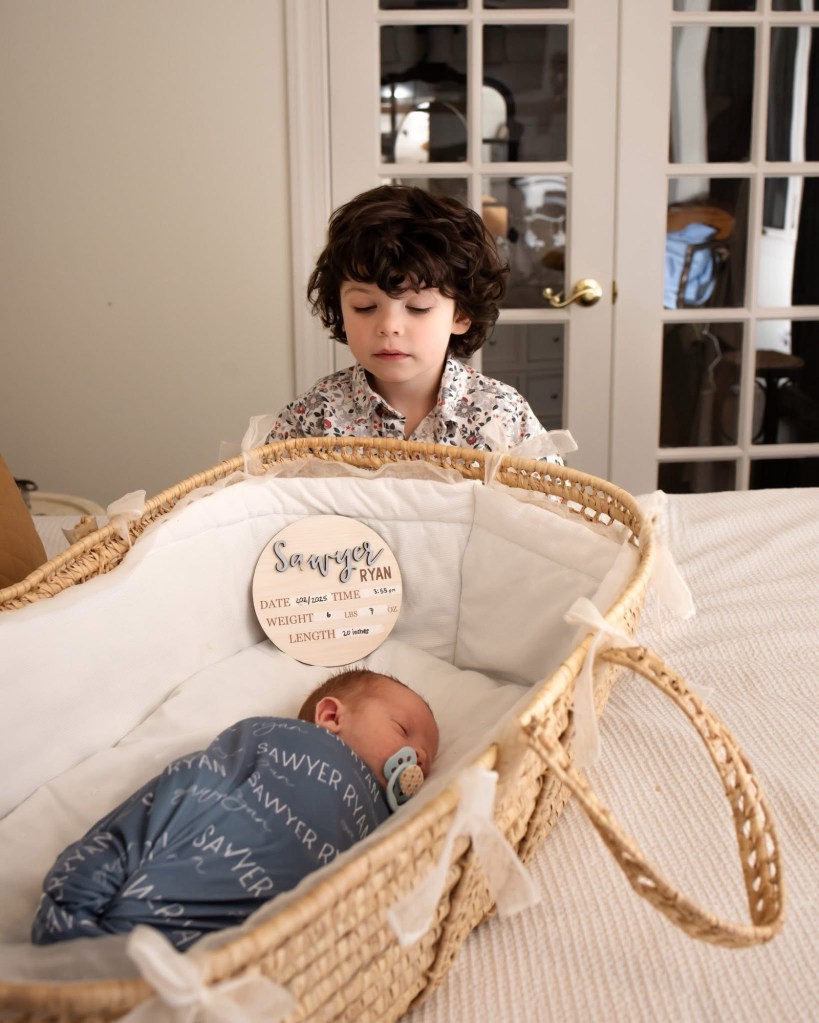
My name is Julianna. I’m a wife to Dakota and a mama to two beautiful boys — August and Sawyer. Our life is full, loud, silly, stressful, and anchored in faith.

August was diagnosed with autism spectrum disorder, and while that diagnosis shifted our world, it didn’t define it.

It deepened it.

This space, August, Always, is where I’ll share our journey as a family navigating autism — the therapy wins, the hard days, the impact on marriage and sibling relationships, and the quiet, holy moments in between.

You’ll find honesty here.

You’ll find faith here.

You’ll find celebration of small victories.

I am not an expert.

I am not a therapist.

I’m simply a mother learning to trust God in the unknown and love my children fiercely through it all.

If you’re here because your child was just diagnosed…

If you’re in the middle of questions and uncertainty…

If you’re learning that motherhood looks different than you imagined…

You are not alone.

Thank you for being here.

This is our story.

August, always.

August and Sawyer